
Comanche County Probate Court
Probate records in Comanche County route through the Probate Division of District Court. The research did not locate a separate Comanche County probate court, surrogate court, or orphans court page. The court contact is Comanche County District Court at the courthouse in Coldwater, with Clerk Jenni Bruckner handling district court records and copy questions.
The Comanche County District Court Clerk page lists the local court address and phone, while the Kansas Judicial Branch publishes the Comanche County Courthouse page as part of the 16th Judicial District. Probate filings belong to the district court record system, and related property records may also involve the Comanche County Register of Deeds when an estate affects recorded land.
Comanche County District Court
201 S New York, PO Box 722
Coldwater, KS 67029
620-582-2182
Fax: 620-582-2603
Probate Definitions
Probate vocabulary matters because search results and docket entries often use short legal labels rather than plain-language descriptions. These definitions fit the Comanche County district court context.
- Decedent
- The person who died and whose property may be handled through an estate case.
- Estate
- The property, debts, rights, and obligations handled after death.
- Will
- A written document that directs property distribution and may name a personal representative.
- Testate
- Dying with a will.
- Intestate
- Dying without a will.
- Personal representative
- The person appointed to administer the estate. Older language may say executor or administrator.
- Letters testamentary / administration
- Court documents showing authority to act for the estate.
- Inventory
- A list of estate property and value information filed in the case.
- Creditor claim
- A claim by someone who says the estate owes money.
- Final settlement
- A filing or order that wraps up administration and distribution.
- Guardianship
- A court case about personal care or decision-making for a minor or protected person.
- Conservatorship
- A court case about managing property or finances for a protected person.
Search Comanche Probate Records
Public probate case information and documents may be available through Kansas CaseSearch when the case is public under court rules. The courthouse terminal is another channel for public records not available online. Older records, certified copies, non-online documents, and records that need clerk review should be requested from the Clerk of the District Court at 620-582-2182.
- Start with Kansas CaseSearch for public district court probate case information.
- Search by party name, case number, or other available public search fields.
- Review the case type and docket entries to confirm whether it is an estate, guardianship, conservatorship, trust, or related probate matter.
- If the public portal does not show the record, use the courthouse terminal or contact the clerk for older, restricted, or non-online files.
- Ask the clerk how to request plain copies, certified copies, letters, or file-stamped documents.
Not every probate-adjacent record lives in the probate file. Deeds and recorded land documents are Register of Deeds records, while the estate case itself is a district court record.
Comanche Probate Record Types
Probate files can be short or extensive depending on the estate, disputes, property, and protected-person issues involved. Routine estate records may be public, but guardianship or conservatorship files can contain medical, personal, and financial material that is restricted or redacted.
- Wills filed in an estate case.
- Petition for probate or administration.
- Letters testamentary or letters of administration.
- Notice to creditors.
- Inventory and valuation.
- Claims against estate.
- Sale of real estate or personal property.
- Accounting, final settlement, and discharge.
- Guardianship and conservatorship petitions and orders.
- Small estate affidavits.
- Trust-related filings when court action occurs.
Probate Forms and Estates
The Kansas Judicial Council legal forms page links statewide civil and probate-adjacent forms, including Small Estates Affidavit under K.S.A. 59-1507b. No separate Comanche County probate packet was located in the official research, so the statewide forms route and the clerk's office are the supported channels.
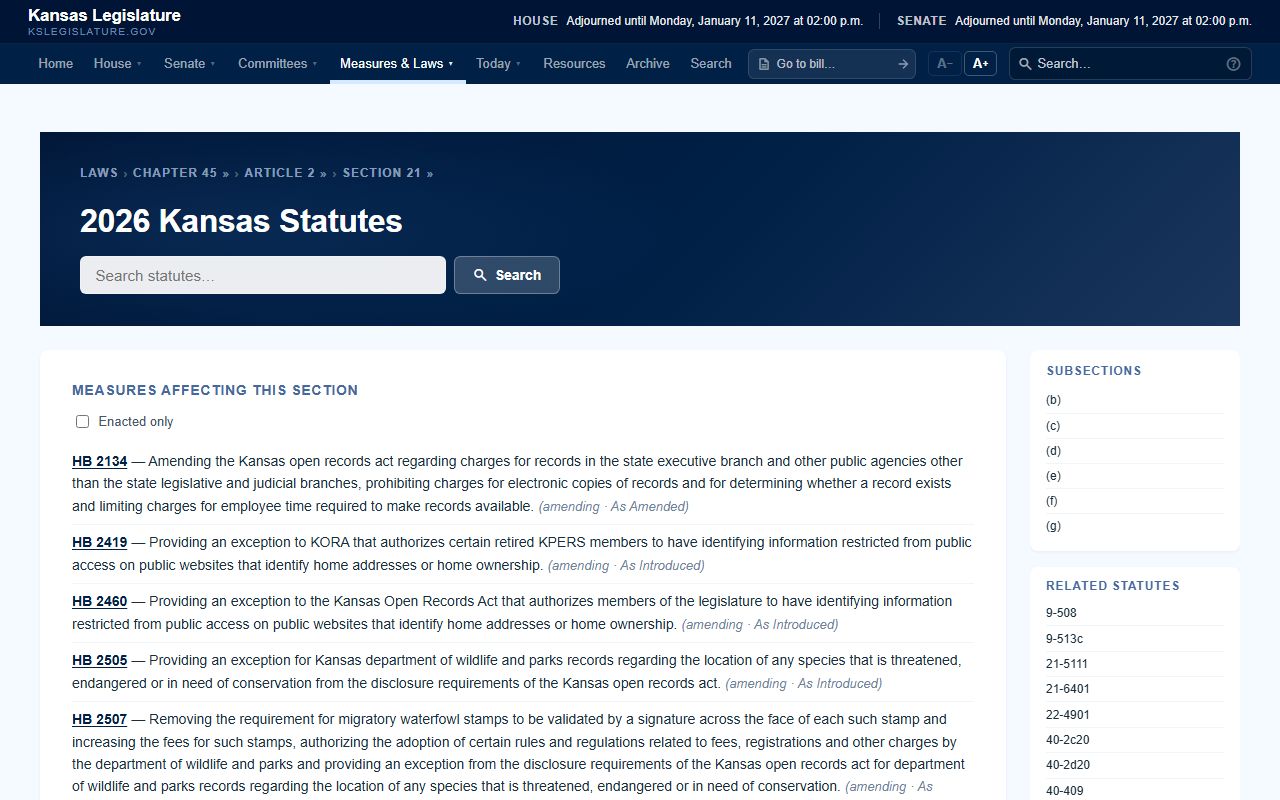
The K.S.A. 45-221 public-record exemptions page is a Kansas law source relevant to restricted records and redaction.
Probate Fee Context
The Kansas Self-Help fee page provides statewide district court fee categories, but the research did not locate a Comanche-specific probate filing-fee schedule or local certified-copy table. Confirm current probate filing, copy, certification, and letters costs with the Clerk of the District Court before filing or requesting documents.
| Probate item | Amount / status | How to confirm |
|---|---|---|
| Probate estate filing | Use current statewide district court fee guidance | Confirm with Clerk of the District Court at 620-582-2182. |
| Small estate affidavit | Statewide form available; filing need depends on use | Check Kansas Judicial Council forms and clerk instructions. |
| Guardianship or conservatorship filing | Confirm current filing fee | No local Comanche probate fee table was located. |
| Plain copy | Confirm with clerk | Ask for per-page cost and delivery options. |
| Certified copy or letters | Confirm with clerk | Ask whether certification, exemplification, or letters are needed. |
| Register of Deeds records | Separate office and fee context | Contact the Register of Deeds for recorded land documents tied to an estate. |
How Probate Works
Probate steps vary by estate and by whether there is a will, real property, creditors, disputes, or a need for protected-person authority. The Comanche County research supports this general district court sequence.
- Identify whether a formal probate case is needed or whether a small estate affidavit or nonprobate transfer applies.
- If a will exists, file the will and petition in the district court with proper venue.
- Ask the court to appoint a personal representative and issue letters.
- Give required notice to heirs, devisees, creditors, and interested parties.
- Inventory estate assets and address debts, claims, taxes, and property issues.
- Seek court approval where required for sales, distributions, accountings, or disputed matters.
- File final settlement or accounting and request discharge.
Probate Record Fields
A public Kansas district court probate record may show a case number, case caption, case type, filing date, petitioner, attorney, decedent or protected person name, docket entries, documents, hearings, and assigned judge or magistrate. Case type labels may include probate, estate, guardianship, conservatorship, or trust.
| Field | What it usually means |
|---|---|
| Case number | The district court identifier for the probate matter. |
| Caption | The estate, guardianship, conservatorship, or trust name. |
| Case type | Probate, estate, guardianship, conservatorship, trust, or related type. |
| Petitioner | The person asking the court to open or act in the case. |
| Letters | Authority issued to a personal representative or administrator. |
| Docket entries | Petition, notice, inventory, claims, hearing, orders, settlement, and discharge events. |
| Documents | Public documents if Rule 22 permits online access. |
Probate and Deed Records
Estate cases may affect real property, but the probate file and the land record are not the same document set. Court orders, petitions, and estate administration filings stay with the district court case. Deeds, recorded transfers, and land instruments belong with the Register of Deeds.
The Comanche County Register of Deeds page is the county office source for recorded land documents.
Small Estates and Guardianships
Small estate, guardianship, and conservatorship issues are often the probate records that need the most careful routing in Comanche County. The research found a statewide Kansas Judicial Council forms route, including a small estates affidavit reference, but no Comanche-only probate packet. That means a user should confirm with the Clerk of the District Court before assuming a form is enough to transfer property or gain authority.
A small estate affidavit may help in some Kansas estate situations, but it is not the same as opening a full estate case, and it does not replace a deed, title process, or court order when those are required. Guardianship and conservatorship matters are different because they deal with authority over a living person's care, property, or finances. Those files can contain medical and personal financial information, so public access can be narrower than a routine estate file.
| Probate path | Common use | Comanche County access note |
|---|---|---|
| Formal estate case | Administering an estate through court supervision | Search CaseSearch first, then contact the district court clerk for copies or older documents. |
| Small estate affidavit | Handling qualifying small-estate property without full administration | Use Kansas Judicial Council forms and confirm limits with the clerk before relying on the form. |
| Guardianship | Personal care or decision-making for a minor or protected person | Public access may be restricted because sensitive personal facts can appear in the file. |
| Conservatorship | Managing property or finances for a protected person | Financial and medical details may be redacted or withheld from public access. |
| Recorded land transfer | Recording a deed or land instrument after probate authority exists | Use the Register of Deeds for the recorded land document, not the probate docket. |
Restricted Probate Records
Routine estate filings may be public, but guardianship and conservatorship records can include medical records, personal financial details, minor information, protected personal identifiers, and sealed filings. Some documents may be redacted, withheld from remote access, or available only to parties, attorneys, or people with court permission.
Kansas CaseSearch and courthouse terminal access do not override court rules, confidentiality statutes, or sealing orders. If a probate record is missing from public search results, contact the Clerk of the District Court and ask whether the case is restricted, older, not migrated, courthouse-terminal-only, or available by copy request.